3GPP Public Warning System Cell Broadcast Centre

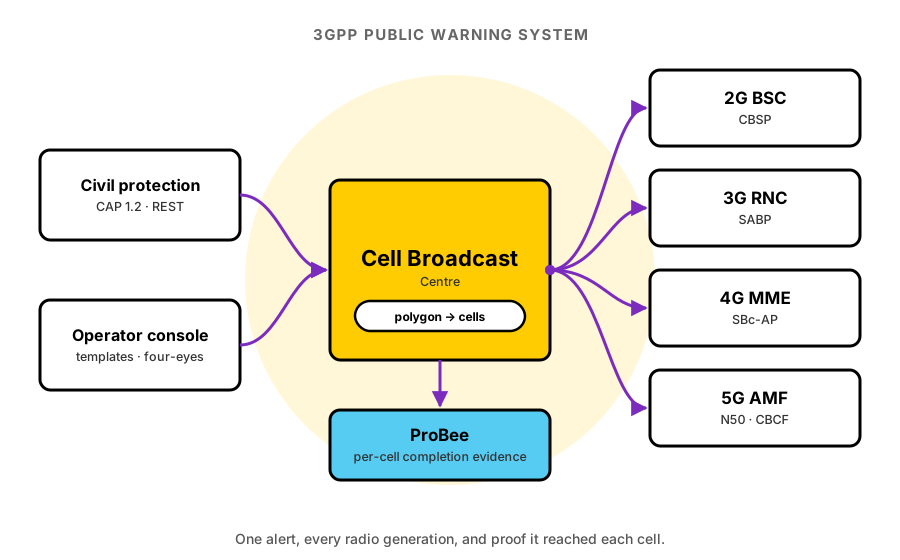
The component that turns an alert from a civil-protection authority into a warning on every handset in the affected area — across 2G, 3G, 4G and 5G at once, without knowing a single phone number, and without waiting for the network to be quiet. It is the one messaging system nobody notices until the day it matters most.

  • 3GPP TS 23.041 Cell Broadcast Centre with a 5G CBCF over N50 in the same platform
  • EU-Alert, CMAS / WEA and ETWS message profiles, with multi-language variants
  • CAP 1.2 intake from alerting authorities, plus a REST API and an operator console
  • Polygon and circle targeting resolved to cells from your own RAN planning data
  • Per-cell delivery reporting, audit trail and ProBee evidence for the regulator

3GPP TS 23.041

EU-Alert

CMAS / WEA

ETWS

CAP 1.2

CBSP · SABP

SBc-AP

5G CBCF · N50

Geo-targeting

Geo-redundant

PX instrumented

Why the CBC is back on the agenda

Article 110 of the European Electronic Communications Code made mobile public warning mandatory across the EU from June 2022. Many cell broadcast centres were stood up in a hurry to meet that date — frequently as an add-on to a RAN contract, sized for compliance rather than for operation.

Three things are now forcing a second look. 5G standalone cores need a CBCF speaking N50 to the AMF, which many first-generation deployments do not have. 3G switch-offs and RAN-sharing agreements are changing which cells sit behind which controller. And regulators have moved from asking whether an alert was sent to asking where it was received.

Cell broadcast is point-to-multipoint: one message per cell, delivered to every attached handset regardless of network load. That is exactly why it is the right tool for emergencies — and why getting the cell list, the repetition schedule and the per-cell acknowledgements right is the whole job.

Capabilities

Alert intake

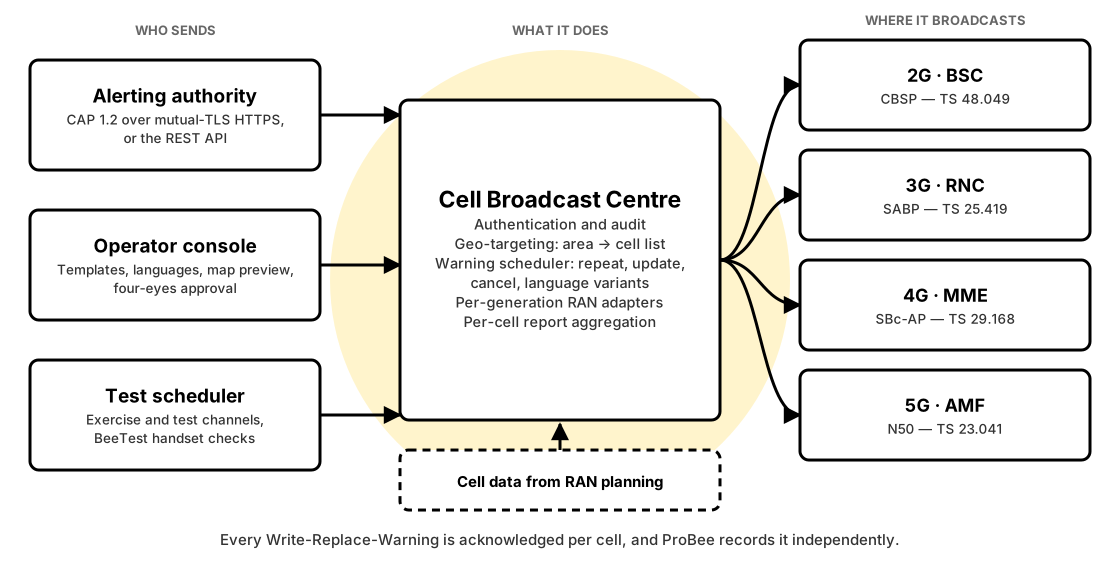
  • CAP 1.2 over mutual-TLS HTTPS from national and regional authorities
  • REST API for operator systems and integrators
  • Web console with pre-approved templates and four-eyes release
  • Multi-language variants per alert, sent as linked messages

Geo-targeting

  • CAP polygons and circles resolved to cell, TAI or LAC lists
  • Cell geometry imported from your RAN planning tool, versioned
  • Map preview of the affected cells before release
  • Update and cancel against the same warning area

Broadcast engine

  • Write-Replace-Warning and Stop-Warning across every generation
  • Repetition period, number of broadcasts and emergency presentation
  • Active warnings re-sent automatically after a cell or node restart
  • Shared-RAN and multi-PLMN broadcast for network-sharing agreements

Resilience and evidence

  • Active-active across sites; no single node on the alert path
  • Per-cell success and failure reports aggregated per alert
  • Immutable audit trail: who drafted, who approved, what was sent where
  • Scheduled test broadcasts on the exercise channels, verified by BeeTest

One alert, four radio generations

Handsets do not choose which network they are camped on during an emergency. The CBC has to reach all of them, through whichever controller owns each cell.

RadioPeerInterfaceSpecification
2G / GSMBSCCBSP (CBC–BSC)3GPP TS 48.049
3G / UMTSRNCSABP over Iu-BC3GPP TS 25.419
4G / LTEMMESBc-AP over SCTP3GPP TS 29.168
5G SAAMFN50, service-based (CBCF)3GPP TS 23.041, TS 29.518
5G via 4G CBCAMFSBc through PWS-IWF3GPP TS 23.041
Deploy only the adapters your network needs today, and add N50 when the standalone core arrives — without replacing the CBC.

Logical architecture

Alert gateway. Authenticates each alerting authority, validates the CAP message, and maps severity, urgency and category onto the right message identifier for EU-Alert, CMAS or ETWS.

Geo-targeting service. Resolves the warning area against a versioned cell database, so the cell list for any alert can be reproduced later exactly as it was sent.

Warning scheduler. Owns the life of every active warning: repetition, language variants, updates, cancellation and re-broadcast after a restart indication from the network.

RAN adapters. CBSP, SABP, SBc-AP and N50 terminations, each scaled and upgraded independently.

Assurance plane. Per-cell reports from the network, cross-checked by ProBee on SBc-AP and N50, and by BeeTest handsets on the test channels.

Assurance Proof it went out

After a real alert, the first question from the authority is rarely about the text. It is: did it reach everyone in the area, and how quickly? Most CBCs can only answer with their own logs.

This one is built by the team that builds ProBee, so the answer comes from two places: the per-cell acknowledgements the RAN returned, and an independent record of the signalling on the wire. Where they disagree, you find out in the test, not in the post-incident review.

  • Per-alert report: cells targeted, cells confirmed, time to first and last confirmation
  • Failures attributed to a controller, a site or a configuration mismatch
  • Regular test broadcasts scored end to end on real handsets
  • Export formats for regulatory reporting, retained per your policy

Who needs one

Operators moving to 5G SA

Your standalone core needs a CBCF on N50. Adding it to a first-generation CBC is often harder than replacing the CBC.

Operators with a bundled CBC

A CBC that came with a RAN contract ties public warning to one vendor’s controllers. Multi-vendor RAN needs a neutral one.

RAN-sharing ventures

One radio network, several PLMNs, one legal obligation each. A multi-PLMN CBC serves them from the shared RAN.

Countries introducing a mandate

Authorities and integrators building national public warning need a CBC per operator that speaks CAP, not a proprietary client.

Would your CBC pass a real alert tomorrow?

We will walk through your current public warning set-up, interface by interface, and tell you honestly where it would fail.